Cat Toilet Training Pros And Cons

You may have seen the commercials on television and online: Products claiming to be able to train your cat to use the toilet. But before you jump for joy at the thought of being able to live free of the litter box, there are many factors to consider before deciding whether to try it on your feline friend.Benefits of toilet training your cat
The most obvious benefit to teaching your cat how to use a toilet is being able to eliminate the litter box, and the smell and expense that comes with it. One bag of cat litter might not seem like a lot, but add the expense up over the course of a year, or an entire cat's life, and the cost can run into the thousands.You can free up the space you used to store the litter box in, and you can also break free of vacuuming the litter that your cat tracks around the house. Is toilet training really the right choice for your cat?There are plenty of negatives, too. Pam Bennett, a cat behaviour specialist in Nashville, believes that cat toilet training is an extremely bad decision."

Toilet training is not a natural behaviour for a cat," she says. "It goes against the cat's natural instinct to dig, eliminate and cover." In addition, she adds, "Maintaining a traditional litter box will help you to better monitor your cat's urine and fecal output. That's valuable information regarding your cat's health."The trouble with cat toilet trainingAdditionally, toilet training your cat could be an issue should you go away on vacation and need to board your cat, or if your cat is hospitalized for any reason. "Upon returning home, it can cause a setback in the training process," Bennett explains. "The confusion can also add to the cat's stress." Keep in mind: If you have guests in your home, they will need to remember to keep the washroom door open, and the toilet lid up. "That means all family members and guests who use the toilet must comply," says Bennett. "One mistake, and kitty has no toileting option."How to train your cat to use the toilet
There are a couple of highly rated toilet-training kits on the market that teach cats to use a toilet instead of a litter box.

They can range in price from $25 to $60, but they all generally work the same way: You start by fitting your toilet seat with a series of plastic rings your cat will be able to step on so that it doesn't fall into the toilet. Each plastic ring has a hole in the middle of it, and as your cat gets comfortable with the rings, the hole will get larger over time. The end result is your cat balancing on the toilet seat.
Lighted Vanity Mirror Battery OperatedIn addition to having to spend the time teaching your cat, you will also need to exert a great amount of patience.
1966 Mustang Gt Car CoverYou might find that you will have to go back and repeat steps if your cat suffers a setback in training.
Basset Hound Puppies For Sale In Northeast Ohio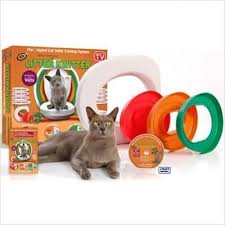
"Cats are incredibly smart and are easy to train," says Bennett. "But your cat's health and welfare should come before human convenience." Research pet toilet trainingEach cat owner will have to weigh the pros and cons of toilet training to determine if it's the right thing to do for your cat, and your own personal lifestyle. Make sure to do plenty of research. If you decide to go with a toilet training kit, make sure to follow the instructions carefully. There are also plenty of books, online tutorials and videos to help you -- and entertain you -- if you need them. Gluten-Free Strawberry Crumble
Photography by Jeff Coulson Credits: Gluten-Free Strawberry Crumble
Photography by Jeff Coulson Crunchy-Top Blueberry Muffins
Photography by Mark Burstyn Credits: Crunchy-Top Blueberry Muffins
Photography by Mark BurstynFurball’s days of using eco-friendly cat litter may be numbered. Recently, Ewa, one of my blog readers, wrote in to recommend toilet training your cat as an alternative to using kitty litter.

It made a lot of sense to me when I calculated that Furball was going through at least 200 lbs of litter a year. I also knew he was toxoplasmosis-free, so I wasn’t concerned about flushing his waste. Ewa wrote that she was using the Litter Kwitter cat toilet training system and thought this was the best system as it seemed more durable and allowed you to go back a step in the training process. Without it being said, she was probably comparing Litter Kwitter to CitiKitty. After I read her email, I looked at reviews on Amazon for Litter Kwitter and CitiKitty. There seemed to be a number of reviews that concurred with Ewa. I thought about buying the Litter Kwitter, but balked at the hefty price tag. Also, when I read feedback on toilet training your cat, it seemed like the bathroom would be one giant mess of litter, feces and urine until the cat was trained, which could take months. With the demands of a new baby in the house, I hesitated. After I posted Ewa’s tips on toilet training your cat, I got an email from CitiKitty.
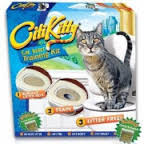
They offered to send me one of their cat toilet training kits for evaluation. They also told me some interesting facts about their product. They use recycled plastic and 100% recycled (50% post-consumer-waste) paper for the instructional materials that come with the kit. The product and its packaging is made in the U.S. unlike Litter Kwitter, which Amazon reviewers said was made in China. Litter Kwitter also comes with an instructional DVD, which seems a little unnecessary. As with anything “green”, you need to weigh the pros and cons of the resources used to make the cat toilet training kit vs. the resources and waste from cat litter. One of the major complaints about CitiKitty in the Amazon reviews was that once you punched out a ring, you couldn’t go back if your cat got freaked out by the bigger hole. Well, I just received the CitiKitty cat toilet training kit today, and I noticed there’s an extra ring set included that does allow you to backtrack. My mother-in-law is going to be visiting for six weeks to see her grandchild and give us a helping hand.